

Germ Cell Tumour of the Ovary: Can Fertility Be Kept?

Indian Ovarian Cancer Institute (IOCI) · Ahmedabad & Gandhinagar

Tapping Book on WhatsApp will likely open the WhatsApp app on your phone.

Last updated: 27-Oct-2026

Ovarian germ cell tumour in girls and young women: tumour markers, fertility-sparing surgery, chemotherapy and follow-up · Gota OPD, Ahmedabad · Apollo Hospital, Bhat, Gandhinagar

IN SHORT

A germ cell tumour grows from the cells that make eggs. It is uncommon, it mostly appears in teenagers and young women, and it usually affects only one ovary.

Most of these tumours respond well to treatment. The usual operation removes the affected ovary and tube. The womb and the other ovary stay, so periods and pregnancy remain possible.

Blood tests called tumour markers guide the diagnosis and the follow-up. Chemotherapy is added when the stage or the type needs it.
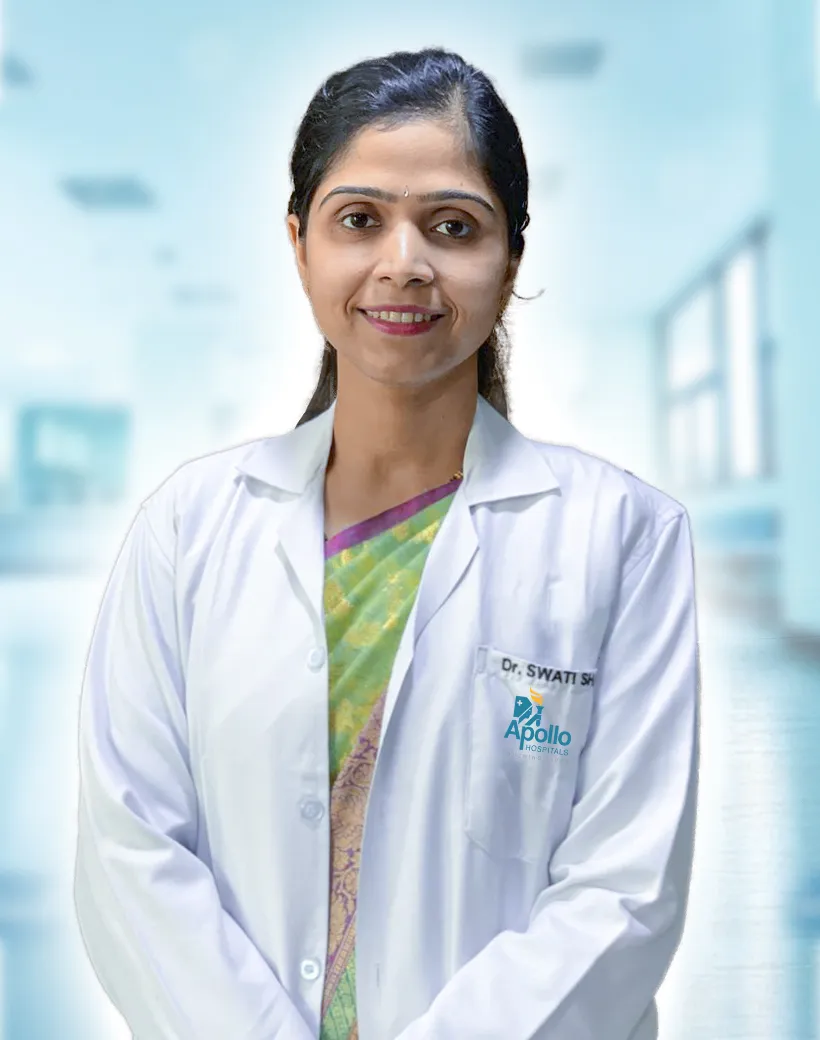
Dr Swati Shah, ovary cancer surgeon, Ahmedabad

Dr Swati Shah
MS, DrNB (Surgical Oncology)
Ovary Cancer Surgeon
Apollo Hospital, Bhat, Gandhinagar · Gota OPD, Gota, Ahmedabad · 18 years of experience
★★★★★ 4.96 from 24 Google reviews

Indian Ovarian Cancer Institute (IOCI). Dr Swati Shah holds MS, DrNB (Surgical Oncology). She studied medicine and trained in general surgery at Maulana Azad Medical College, Delhi. She trained in surgical oncology at Rajiv Gandhi Cancer Institute and Research Centre, Delhi. She has 18 years of experience in cancer surgery for women. She has worked on the robotic console since 2013.

These tumours are uncommon. Your slides are read by a gynaecological pathologist. A tumour board plans the treatment with you before it is final.

What an ovarian germ cell tumour is

The ovary contains egg-forming cells, called germ cells. A germ cell tumour starts from these cells. Several types exist, and each behaves a little differently.

Most lumps of this kind in young women are harmless. A mature teratoma is the usual example, and it is not a cancer. The cancerous types are fewer, and the pathology report names which one you have.

Main types of ovarian germ cell cancer
TypeWhat it is likeMarker that may rise
DysgerminomaGrows fast but responds well to chemotherapyLDH, sometimes hCG
Yolk sac tumourGrows quickly and needs chemotherapyAFP
Immature teratomaHas young tissue; its grade guides the planAFP, sometimes
Embryonal carcinoma and choriocarcinomaRare; treated with chemotherapyhCG
Mixed germ cell tumourMore than one type in one tumourAFP and hCG

Many of these tumours occur on one side only. The other ovary is usually normal, which is why it can be kept.

Symptoms and how it is found

These tumours often grow fast. A lump low in the belly, a swelling or a dull ache is the usual story. Sometimes pain comes suddenly when the ovary twists.

  • A growing swelling or a firm lump in the lower belly, felt by the patient or her mother.
  • Pelvic or belly pain, sometimes sudden and severe when the ovary twists or a lump bleeds inside.
  • A change in periods, or a feeling of pressure on the bladder or bowel.
  • Early puberty or other hormone signs, in a few girls, if the tumour makes hormones.

Dr Swati Shah starts with an ultrasound and a pelvic MRI or CT. She also orders blood tests for AFP, hCG and LDH, together with CA125 where it helps. These markers are drawn before any operation. Their level helps to tell which type is likely, and it becomes the baseline for follow-up. A needle biopsy is avoided when a tumour can be removed whole, because it may spill cells.

Staging: how far the tumour has gone

Germ cell tumours are staged with the same FIGO system as other ovarian cancers. Most are found while still limited to one ovary.

FIGO stages, in plain words
StageWhere the tumour isUsual plan
Stage 1Inside one ovary, or bothFertility-sparing surgery with staging; chemotherapy depends on type and grade
Stage 2Has spread to the pelvisSurgery, followed by chemotherapy
Stage 3On the belly lining or in glandsChemotherapy with surgery, in an order judged for you
Stage 4In the liver, lung or elsewhereChemotherapy first, surgery for what remains

Staging is done during the operation, by looking carefully at the belly and taking samples. It tells whether chemotherapy is needed afterwards.

The operation: protecting fertility

The standard operation removes the affected ovary and tube. The womb and the other ovary are left in place, even when the disease has spread.

  1. Removal of the affected ovary and tube. The tumour is taken out whole, and not cut open.
  2. Washings. Fluid from the belly is sent for cancer cells.
  3. A careful look at the other ovary. It is examined, and it is biopsied only if it looks abnormal.
  4. The omentum and the belly lining. The omentum is removed, and samples are taken from the belly lining and the pelvis.
  5. Glands. Glands that look enlarged are removed. In many tumour types every gland need not be taken out.

The womb, the tube and the other ovary stay. This is safe for most women, even after chemotherapy. For a small tumour that fits in a bag, keyhole or robotic surgery may be possible. A large tumour is usually removed through an open cut, so that it does not burst. Removing the womb and both ovaries is kept for rare cases. One example is a woman who has finished her family and has widespread disease.

Chemotherapy: who needs it

Chemotherapy is added for most germ cell cancers beyond a very early stage. The usual combination of three medicines is called BEP.

When chemotherapy is used
SituationUsual approach
Early stage dysgerminoma, fully stagedWatchful follow-up may be enough, or a short course.
Early stage, low-grade immature teratomaSurgery alone, with close checks.
Yolk sac tumour, mixed tumour, or higher gradeA few cycles of BEP after surgery.
Spread beyond the ovaryBEP, with surgery for any leftover tumour.

BEP stands for bleomycin, etoposide and cisplatin. It is given in cycles, each with a few days in hospital. The side effects include hair loss, tiredness, low blood counts, nausea and tingling in the hands. Your lungs, kidneys and hearing are checked, because these medicines can affect them. We explain each risk and how it is watched before you begin. Chemotherapy rarely stops the remaining ovary from working, and most women keep their periods.

Fertility and hormones

Most women treated for a germ cell tumour keep their periods and can plan a pregnancy later. Fertility is discussed before any treatment starts.

  • Before surgery, we ask about plans for children and explain which structures can be saved.
  • Egg freezing can be talked through where time allows, especially if both ovaries are at risk.
  • After treatment, a pregnancy is usually planned once the early follow-up period is over. Plan it with Dr Swati Shah and your gynaecologist.
  • If both ovaries must go, hormone support is offered for bones, heart and comfort.

The choice is yours. We never remove the womb or the second ovary without a reason you have understood.

Follow-up after treatment

Follow-up is close in the first two years, when a return is most likely, and then spaced out. Tumour markers and scans do most of the watching.

  • The first two years: a visit with an examination and blood markers every few months. Scans are added at set points.
  • Later years: visits are spaced further apart, usually to five years.
  • New symptoms bring you in sooner: a lump, pain or a rising marker.
  • If the tumour returns, further chemotherapy and surgery are available, and many women are treated again.

You leave hospital with the schedule in writing, so that any doctor you meet later knows the plan.

Risks and certainties, named in words

Any operation carries risk, and so does chemotherapy. A few things are certain, and you should hear them before you consent.

What can happen, and what is certain
Risk or certaintyWhat it means
Bleeding, infection or injury to the bowel or bladder.Uncommon. Explained in full before consent.
A tumour bursting during surgery.Avoided by careful handling; the approach is chosen for this reason.
Lung or kidney effects of chemotherapy.Tested before and watched during treatment.
The tumour returns after treatment. A real chance.Found by markers and scans, and treated again.
Fertility is lowered. Possible, if both ovaries are involved.Counselling and egg freezing are discussed first where possible.
Early menopause. Certain if both ovaries are removed.Symptoms, bones and heart are looked after.

What patients and families have said

★★★★★

“My relative received treatment for an ovarian condition at Indian Ovary Cancer Institution. The medical team provided clear explanations, professional care, and support throughout the treatment process. We truly appreciate their kindness and guidance. Thank you to the entire team for helping us through this journey.”

— Varsha Patel, Google review

★★★★★

“My relative was diagnosed with Stage 3 ovarian cancer involving the omentum and peritoneal deposits. We consulted Indian Ovarian Cancer Institute (IOCI), where the complete treatment plan was explained in detail. The team successfully performed Cytoreductive Surgery (CRS) with the goal of complete tumour removal. We were impressed by the surgical expertise, teamwork, and post-operative care. We would confidently recommend IOCI to anyone seeking treatment for advanced ovarian cancer. Special thanks to Dr. Swati Shah who was very patient and answered all our questions patiently.”

— Adv. Sanjay D, Google review

★★★★★

“My relative was treated for ovarian cancer at Indian Ovarian Cancer Institute (IOCI), and we are thankful for the outstanding care throughout the treatment journey. From diagnosis to surgery and follow-up, every stage was managed with professionalism, compassion, and attention to detail. The institute's expertise in robotic ovarian cancer surgery, Cytoreductive Surgery (CRS), and CRS HIPEC gave us complete confidence. We would highly recommend IOCI to anyone seeking comprehensive ovarian cancer treatment in Ahmedabad, Gujarat, or India.”

— Dr Dushyant Baraiya, Google review

These Google reviews are shown exactly as written. They come from families treated for ovarian cancer at the IOCI clinic and at Apollo Hospital, Bhat.

Your path, from first visit to follow-up

  1. Book your consultation. At the Gota OPD, Gota, Ahmedabad, with every scan, report and slide. A parent or family member should come if the patient is young.
  2. Review and tests. Scans and tumour markers are read together, and any missing test is arranged.
  3. The plan. The type, the stage and the fertility plan are explained in plain words.
  4. The operation. At Apollo Hospital, Bhat, Gandhinagar, with intensive care and blood support on hand.
  5. After the operation. Slides are discussed, chemotherapy is planned if needed, and the follow-up schedule is written down.

Cost, insurance and admission

The cost depends on the operation planned, the days in hospital and any chemotherapy. You are given a written estimate before any admission.

Apollo Hospital, Bhat works with the major insurers and with cashless cover, and its office handles the pre-authorisation. The estimate differs for a short and a longer stay, and when chemotherapy is added. We give you the likely range for each. Please bring every scan on a disc or a link, and all slides and reports. Bring the tumour marker results, any operation note, your medicine list, your insurance card and an identity document.

Frequently asked questions

What is an ovarian germ cell tumour?

It is a tumour that grows from the egg-forming cells of the ovary. It is uncommon, it mostly affects teenagers and young women, and it usually involves one ovary.

Is it always cancer?

No. A mature teratoma is a harmless germ cell tumour. The pathology report tells whether your tumour is cancerous and which type it is.

Can I still have children?

In most women, yes. The usual operation removes only the affected ovary and tube, and the womb and the other ovary stay.

Which blood tests are needed?

AFP, hCG and LDH are drawn before surgery, and CA125 where useful. They help name the type and they are checked again during follow-up.

Will I need chemotherapy?

It depends on the type, the grade and the stage. Many early tumours need only surgery and close checks. Others need a few cycles of BEP after surgery.

What does BEP chemotherapy involve?

It combines three medicines: bleomycin, etoposide and cisplatin. It is given in cycles, with lung, kidney and hearing checks along the way.

Can the tumour come back?

Yes, it can, mostly in the first two years. That is why markers and scans continue on a fixed schedule, and further treatment is available.

Where does Dr Swati Shah see patients and operate?

Consultation is at the Gota OPD, Ahmedabad. Operations are at Apollo Hospital, Bhat, Gandhinagar.

Where Dr Swati Shah sees and operates

Indian Ovarian Cancer Institute (IOCI), Shah’s Gastro, Cancer & Robotic Surgery Centre

Dr Swati Shah — MS, DrNB (Surgical Oncology) · Ovary Cancer Surgeon

Consultation: Gota OPD, Gota, Ahmedabad. Surgery: Apollo Hospital, Bhat, Gandhinagar.

Gota OPD, Gota, Ahmedabad — SF-203, 2nd Floor, Olive Greens, S G Highway, Ahmedabad, Gujarat 382481. Directions

Apollo Hospital, Bhat, Gandhinagar — Plot No. 1 A, GIDC Bhat Industrial Estate, Bhat, Gandhinagar, Gujarat 382428. Directions

Call: +91-63590-11009 · WhatsApp: +91-63590-11009

Found an ovarian lump in a young woman, and worried about fertility? Send the scan, the blood reports and any operation or biopsy papers before the visit. Dr Swati Shah reads them first. The consultation can then answer two things. What type of tumour is this? How can the ovary and the womb be kept? Call +91-63590-11009 · Bring the reports to the visit

Tapping Book on WhatsApp will likely open the WhatsApp app on your phone.

Get health updates from Dr Swati Shah on WhatsApp

Swasth Parivar: every week, practical advice on recovery, diet and warning signs. No advertising. Stop any time.

Your number is used for these updates and for the clinic to reach you. It is never sold or passed on. To stop, reply STOP on WhatsApp.

Make An Appointment!